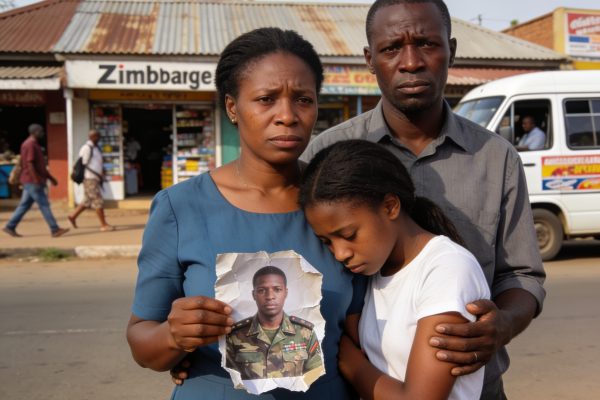
The search for better opportunities has turned into a nightmare for several Zimbabwean families, whose young men left home expecting jobs but ended up on the front lines of the Russia-Ukraine war. Relatives across Beitbridge and eastern Zimbabwe are now pleading with authorities to bring their loved ones home—alive or for burial.
Beitbridge mother awaits son’s remains
Rodwin Chitewere only learned that her son Tanaka Muzirikazi had travelled to Russia after a relative noticed a change in his WhatsApp status. Tanaka, who would have turned 23 this month, had left his village in eastern Zimbabwe in April with his cousin Dylan Goodho. Soon after, a person in Russia contacted the family saying Tanaka had been badly injured in a drone attack. In July, another message brought worse news: he had died. Chitewere says the foreign ministry sent a request for repatriation to Zimbabwe’s embassy in Russia, but she is still waiting for her son’s body. She wants his remains returned for a dignified burial and says the pain is unbearable without closure.
Dylan Goodho’s family thought he was going to Tanzania
Dylan’s father, Vharance Goodho, an artisanal miner, borrowed money to cover police clearance and medical checks because he believed his son had secured work as a car import agent in Tanzania. Only after reaching Russia did Dylan tell his family that he had become a soldier. He later sent $1,500 home and said he was sending back a vehicle, but his family last heard from him in May. His mother, Fadzai Chikove, has urged him to return, telling him he cannot be fighting in a war that is not their own.
Zimbabwe authorities face trafficking cases
Earlier this year, Zimbabwe announced that at least 15 of its nationals had died on foreign battlefields, while more than 60 remained on the front lines. The government has also said five suspected agents are facing human trafficking charges in connection with the recruitment of Zimbabweans. Despite these warnings, families fear recruiters are still active, luring young men with false promises of jobs abroad.
Regional concern grows
Similar cases have emerged in South Africa and Botswana. South Africa reported in February that at least two citizens had died fighting in Russia and 15 had returned home that month. In Botswana, the government warned in July about an “alarming” number of men being misled into the war. One Botswana mother says her 20-year-old son travelled to Russia last July after being told he would attend a personal development course linked to Duduzile Zuma-Sambudla, daughter of former president Jacob Zuma. Zuma-Sambudla resigned as a parliamentarian in December after police began investigating allegations that she lured men to the Russian war. The All Eyes on Wagner collective has published names of more than 1,400 Africans it says Moscow recruited between January 2023 and September 2025, with over 300 of those recruits dead.
For Zimbabwean families, the wait continues—some hoping for a phone call, others for a coffin.