Harare Needs US$500m to Fix Sewer Network
HARARE, October 3, 2026 — Harare and Chitungwiza are facing a worsening wastewater emergency, with new parliamentary findings indicating that at least US$500 million is needed to rebuild the capital’s broken sewer network.
For years, residents have lived with burst pipes, blocked drains, overflowing manholes and foul odours near schools, clinics and residential areas. What was once treated as a slow municipal decline is now being described as a direct danger to public health and the environment.
The Warning: Harare’s Water System Is Under Serious Strain
Members of a parliamentary committee tasked with looking into water pollution in the capital’s major sources say the situation has gone beyond ordinary repair work. Their assessment finds that waste treatment infrastructure has been undermined over many years, allowing untreated sewage to reach lakes, streams and community water points.
The committee linked this failure to repeated outbreaks of cholera, typhoid and dysentery. These illnesses are preventable when drinking water is protected and sewage is treated properly, yet the report suggests that weak maintenance, underfunding and delayed procurement have made them a recurring threat for many families.
Why US$500m Matters
The figure is not just a construction budget. Replacing and restoring the wastewater system would require a major effort that includes:
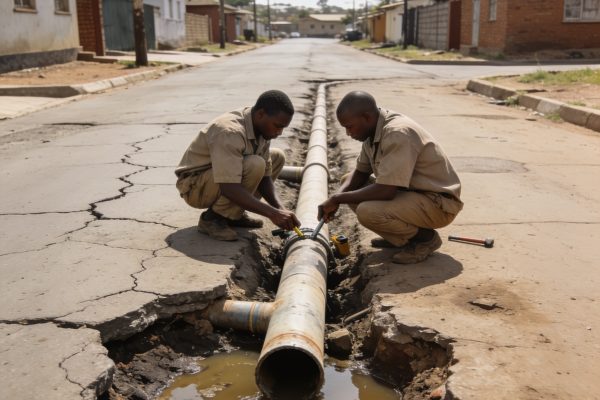
- repairing collapsed and leaking sewer lines across Harare and Chitungwiza;
- rehabilitating treatment works that are overloaded or damaged;
- rebuilding pump stations that keep sewage moving to treatment plants;
- improving drainage in areas where wastewater pools during rain;
- strengthening monitoring to prevent illegal dumping into open drains and water bodies.
Committee findings suggest that the current pace of work is too slow for a metropolitan province with a growing population. In several priority areas, old damage has worsened year after year, increasing both the repair bill and the health risk.
Lake Chivero and the Wider Environmental Cost
The capital’s main water source, Lake Chivero, is at the centre of the crisis. Nutrient pollution from sewage has contributed to algae blooms, fish deaths and invasive water plants. These changes affect not only the lake ecosystem but also treatment costs, fisheries and the safety of nearby communities.
High phosphate levels feed excessive plant and algae growth. When these organisms die and break down, oxygen levels in the water fall, making survival harder for aquatic life. The report describes a cycle that becomes more difficult to reverse the longer it continues.
Money Exists but Must Be Ring-Fenced
A notable concern in the findings is that revenue does not automatically translate into repairs. Residents pay service charges, and regulators can impose penalties for pollution, yet the committee says some of this money is absorbed into general budgets instead of being set aside for urgent infrastructure work.
That gap has practical consequences. If funds are not reserved, municipalities may continue to react to emergencies one burst sewer at a time rather than planning a full recovery programme. The report also points to slow procurement and administrative bottlenecks as factors that delay critical fixes.
Constitutional and Social Implications
Zimbabwe’s Constitution protects the right to a clean and healthy environment. The committee’s view is that ongoing pollution is not only a service delivery issue but also a pressure on citizens’ rights. This is especially true for low-income households that are most exposed to overflowing drains and unsafe water sources.
The findings are also a test of governance. Harare has long been Zimbabwe’s economic heart, and confidence in the capital depends on basic services functioning. A city where water and sanitation fail daily struggles to attract investment, support formal growth and protect public trust.
What Comes Next
The immediate question is whether the reported funding requirement becomes the basis for a serious recovery plan. That would require transparent costing, dedicated financing, faster procurement and accountability for project delivery. For residents, the expectation is simple: fewer raw sewage spills, cleaner water sources, and visible repair work at long-known trouble spots.
Until then, the warning from the committee is clear. Harare’s sewer network is not only a municipal infrastructure problem. It is a public-health emergency, an environmental liability, and a challenge to the city’s ability to govern itself.
ZimHarare News will continue tracking developments on water, sanitation and public health in the capital.