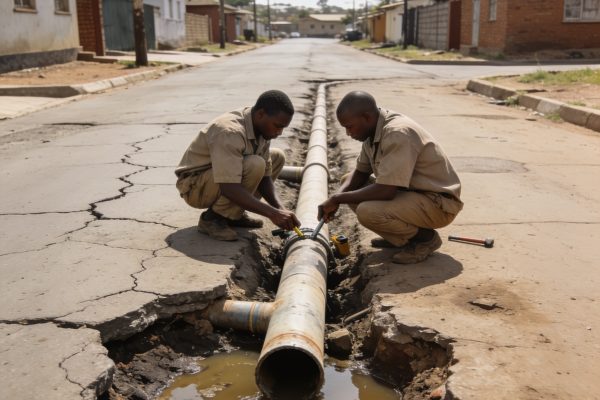
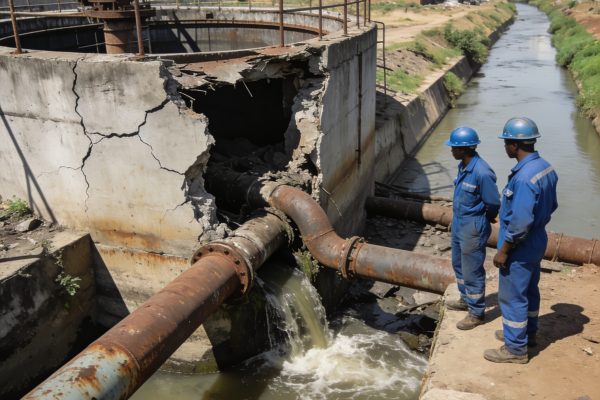
Zimbabwe’s wastewater treatment network is in a state of systemic failure, with Parliament revealing that only 20 of the country’s 63 sewage treatment plants are still operational. The disclosure, made during a parliamentary assessment of national infrastructure, lays bare the scale of a crisis that has been building for years in towns and cities where ageing plants have been starved of maintenance funding.
With roughly two-thirds of the country’s plants out of commission, untreated or partially treated effluent is flowing into rivers, wetlands and, in some cases, residential areas, raising the prospect of waterborne disease outbreaks and long-term environmental damage.
Why the figures matter
The collapse is not merely an engineering problem. Sewage treatment is a frontline public health function, and when plants fail, the consequences move quickly from the technical to the personal. Contaminated water sources are closely linked to outbreaks of cholera, typhoid and dysentery, all of which have placed recurring strain on Zimbabwe’s health facilities in recent years.
Water pollution also damages irrigation schemes, livestock and fisheries that communities depend on for income, while the smell and overflow from broken works frequently spill into residential neighbourhoods, triggering complaints that local authorities have struggled to answer.
The parliamentary warning follows years of complaints from residents’ associations and ratepayers’ groups, who have argued that water and sanitation spending has been consistently deprioritised even as urban populations expand.
Harare’s service delivery squeeze
The national picture mirrors the frustrations playing out in Harare. Stakeholders in Harare South District met this week and agreed on the need to accelerate the delivery of title deeds, water, sewer connections, roads and refuse collection, with officials stressing that all development must comply with regulatory requirements.
For residents in the capital’s southern suburbs, sewer bursts, dry taps and uncollected waste have become part of daily life. The meeting signalled a recognition among stakeholders – from council officials to community representatives – that piecemeal interventions are no longer enough and that planning and service provision need to move at the same pace as housing development.
Councils look for new sources of money
Underpinning the infrastructure failure is a financing gap that municipalities have been unable to close through conventional revenue streams. In Bulawayo, Ward Five councillor Dumisani Nkomo has proposed the creation of a municipal bank to provide affordable, long-term financing that local authorities could use to rehabilitate ageing water and sewerage systems.
The proposal reflects a growing view that councils cannot rely on short-term borrowing or unpredictable transfers to fund infrastructure that takes decades to build and maintain. Similar debates are taking place across local authorities grappling with dilapidated plants, leaking pipe networks and rising non-revenue water losses.
The politics of infrastructure
Water and sanitation are likely to feature prominently when Parliament begins consultations for the 2027 national budget. Economic analyst Edmond Mkaratigwa has argued that budget consultations are critical precisely because they give citizens and other stakeholders a chance to shape national development priorities.
For communities affected by failing sewage plants, that process represents one of the few formal channels available to press for capital spending on infrastructure that has been deferred for too long. Parliamentary portfolio committees have already signalled that service delivery and public health financing will be central to their oversight work.
What happens next
Rehabilitating 43 defunct treatment plants would require sustained capital investment, technical capacity and a credible maintenance regime – none of which can be delivered overnight. In the meantime, the burden falls on households and health facilities to manage the consequences of pollution they did not create.
The immediate test for policymakers is whether the parliamentary disclosure translates into concrete commitments in the coming budget cycle. Without a funded recovery plan, the gap between Zimbabwe’s 20 working plants and the 63 the country needs will continue to widen, with the costs measured in both public health and environmental damage.