As Zimbabwe moves from September into October, the day’s most important stories connect Harare’s infrastructure struggles, workplace justice, parliamentary priorities, court cases and sport. For readers of this Zimbabwe news digest, the central question is whether legal reforms, funding requests and public statements translate into faster service delivery and stronger accountability.
Supreme Court clarifies access to the Labour Court
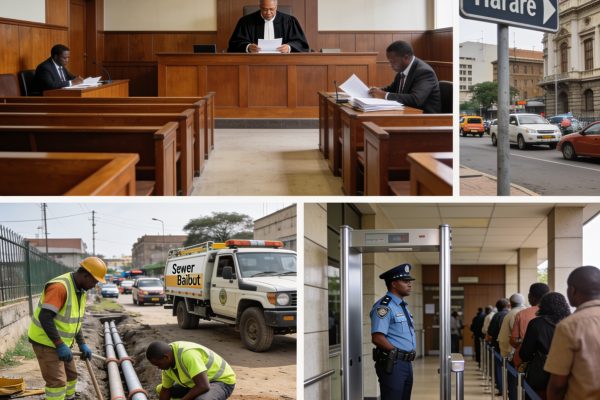
The highest court in the country has confirmed that workers dismissed under a registered employment code may approach the Labour Court directly, without first being forced to complete a conciliation process through a labour officer. The ruling resolves a long-standing procedural disagreement over two remedies available under labour law.
The judgment says the labour officer route is designed as a cheaper, quicker avenue for conciliation, while the Labour Court retains authority to review a completed disciplinary decision on its merits. For employees, this could reduce delays when a dismissal feels harsh or procedurally flawed. For companies, the ruling limits attempts to block a hearing by arguing that another office must be used first.
Harare sewer funds under parliamentary scrutiny
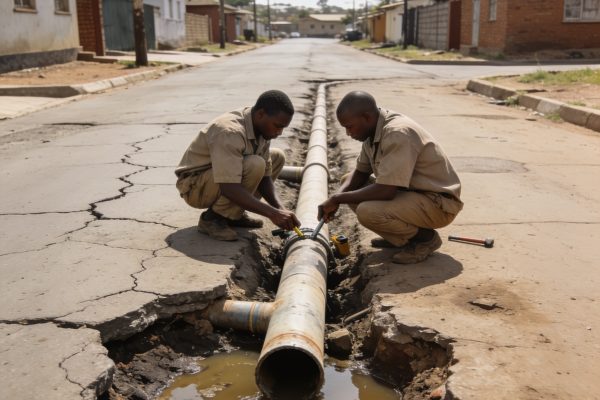
Harare and Chitungwiza councils are again at the centre of an environmental and public-health conversation after a parliamentary report said wastewater fees and related penalties were not being protected for sewer repairs. The councils are now seeking emergency devolution funds worth more than US$9.3 million for projects that include trunk mains to curb daily raw sewage discharge and pump replacements at key water treatment points.
The report frames the problem as one of financial discipline as much as infrastructure ageing. Instead of letting pollution charges and service levies disappear into general spending, committee recommendations call for mandatory ring-fencing so that money raised from affected systems is spent on those systems. It also links poor sewer maintenance to repeated disease risk, especially where residents rely on stressed water sources.
Mnangagwa opens session with a heavy legislative docket
President Emmerson Mnangagwa has opened the Fourth Session of the Tenth Parliament with bills covering health, water, agriculture, transport, trade, veterans support, child justice, legal aid and protection for whistleblowers. The docket also includes alignment work following recent constitutional amendments, especially in electoral and constitutional court laws.
The legislative agenda matters because it shows which areas the executive is trying to formalise next: food safety, medicines control, family planning, water authority functions, tobacco regulation, road administration and maritime shipping. For businesses and citizens, the true test will be not the number of bills introduced but how many become usable, enforceable and properly funded rules.
Robbery, abduction and theft cases draw attention
Several court matters highlight public-safety concerns beyond Harare. A witness in a case involving police officers and artisanal miners alleged that victims were masked, had their heads covered with sacks and had their hands tied during a robbery. In a separate matter, a South African national is accused of abducting a woman who suffered injuries while clinging to a car door as it was driven. In Bulawayo, two men were jailed for theft of donkeys from villagers, a reminder that livestock losses remain a serious hardship for rural households.
These cases are not isolated incidents for a national news audience; they point to overlapping vulnerabilities at gold panning sites, cross-border movement and rural transport corridors. The courts will decide individual guilt, but communities expect faster protection and better coordination between police, local leaders and mining authorities.
Sport: short window for the Cheetahs, big year for Highlanders
Zimbabwe’s sevens rugby squad has a compressed preparation period before travelling to Kenya for the Safari Sevens, with coach Fortune Chipendo focused on recovery and sharp tactical detail. Meanwhile, the Young Warriors prepare for a qualifying campaign that carries Olympic pathway implications as they open against Mauritius at the National Sports Stadium.
Bulawayo’s sporting calendar is equally busy as October brings the centenary of Highlanders FC. The anniversary programme includes community events and celebrations that reflect the club’s deep cultural roots. In athletics, coach Benson Chauke says Zimbabwe’s marathon runners have room to grow, a point that will resonate as the country continues to invest in distance-running development.
Culture, mining tensions and the business signal
The day’s non-hard-news updates also carry useful indicators. Theatre groups in Bulawayo are honouring a late member with a tribute performance, while a local musical collective explores a cross-border collaboration with a South African orchestra. In business, Simbisa Brands reported stronger Zimbabwe operations on higher customer traffic, and August trade data showed a wider surplus as exports rose. The Reserve Bank reduced its policy rate to 27.5 percent, but analysts warn borrowing costs remain high relative to inflation forecasts.
A civil society petition to China’s envoy over alleged destructive mining practices adds another dimension: foreign investment should not outpace environmental enforcement or community rights. The complaints name protected landscapes, rivers, schools and rural areas where mining pressure is creating social friction.
Bottom line for Harare and Zimbabwe
The recurring theme is implementation. A clearer Labour Court route is useful only if workers can access it quickly. A sewer bailout request is legitimate only if councils show transparent use of funds. A heavy bills agenda is meaningful only if it improves services and accountability. Court incidents require efficient investigation, and sports and cultural events need reliable organisation. For Zimbabwe and Harare readers, the next few weeks will show whether these headlines become practical change or another set of promises.