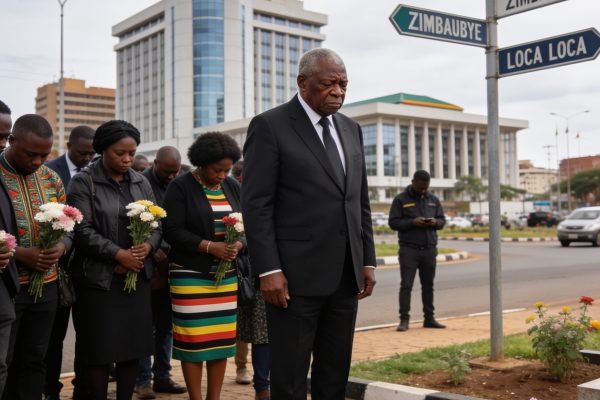
Zimbabweans are mourning, debating and asking what comes next
HARARE — The Marondera helicopter crash that killed businessman Wicknell Chivayo, his wife Lucy Muteki, a personal aide and two pilots has produced an unusually intense national conversation. For many Zimbabweans, the accident is not only an aviation tragedy. It is also a moment that raises questions about wealth, political influence, public accountability and the kind of country they want to build.
President Emmerson Mnangagwa issued a statement saying he was shocked by the deaths and describing Chivayo as an entrepreneur whose generosity reached many sectors. He said Chivayo had plans for rural development, war veterans and disadvantaged communities, and that these ambitions fitted with the government’s broader agenda of investment and transformation. The President also noted that Chivayo had shared some of those plans with him shortly before the crash.
Minister of Youth Empowerment Tino Machakaire confirmed the identities of those on board. Alongside Chivayo and Muteki, the victims were named as Senelisiwe Magagula, Captain Kelvin T. Soda and Captain Courage Mutavirwa. Civil aviation authorities continue to investigate the crash, which involved a Bell 430 aircraft travelling from Chikomba to Harare. Early reports point to a ground impact, fuel spillage and fire, but officials have cautioned that conclusions must wait for the full investigation.
Why the response has been divided
Chivayo was a familiar name in Harare’s entertainment, sports and business circles, often linked to large public gestures. Some Zimbabweans see his charitable acts and investments as examples of private enterprise filling gaps. Others view his public persona as a symbol of a system in which extraordinary wealth and political proximity can appear to move faster than transparent governance.
The divided response reflects a broader frustration in Zimbabwe. People want to be able to trust public institutions without relying on personality-driven narratives. When death arrives unexpectedly, grief and criticism can mix, and public debate often becomes less about the individual and more about unanswered questions: procurement, access, accountability, and whether elite relationships can survive scrutiny.
That tension was visible in entertainment news, where musician Jah Prayzah postponed a wedding that had been planned for the following day. The decision shows how quickly personal and public lives intersected with the tragedy. Yet it also underscores a point many Harare residents are making: the national moment should not stop at mourning. It should encourage clearer institutions and better disclosure.
What Zimbabweans can take from the week
For readers in Harare and across the country, the crash should be treated as a reminder to demand three things: credible accident investigation, transparent explanations for public-private engagements, and respect for victims outside political narratives. The pilots, their families and the personal aide deserve the same seriousness as any other victims. The public deserves information that is timely, independent and factual.
Local businesses, sports clubs and communities that received support may mourn a patron, but civic life needs systems that are less dependent on individual generosity. If Zimbabwe is to build a more predictable economy, it must channel private philanthropy into transparent development projects that can continue after individuals are gone.
For now, Zimbabwe is grieving a sudden loss. The question is whether the grief becomes a catalyst for stronger accountability, clearer public information and a political culture where wealth and influence can be examined without fear.
Related Zimbabwe news themes
-
Marondera helicopter crash: aviation investigation continues in Mashonaland East.
-
Wicknell Chivayo death: tributes from President Mnangagwa and other public figures.
-
Jah Prayzah wedding postponed: entertainment sector reacts to the tragedy.
-
Public accountability debate: wealth, politics and civic trust dominate national discussion.
This article draws on Zimbabwe news reports, official statements and public reactions from national figures.