
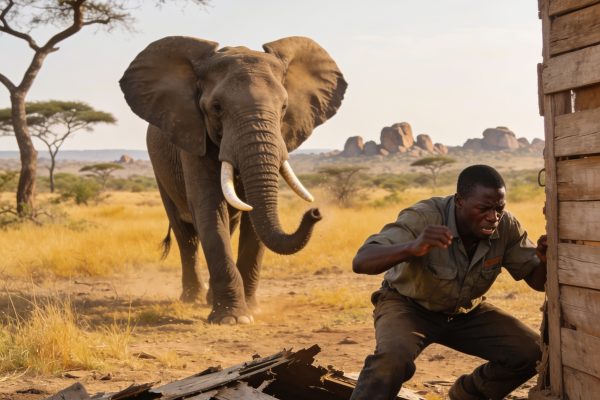
A man has died after being attacked by an elephant at Spurwing Island, with the Zimbabwe Parks and Wildlife Management Authority (ZimParks) confirming the fatality.
According to the authority, the attack occurred at approximately 05:20am. ZimParks confirmed the incident but further details on the circumstances surrounding the encounter were not immediately available.
The death is the latest in a run of dangerous encounters between people and wildlife, a problem that has grown steadily more visible in Zimbabwe as animals move beyond the boundaries of protected areas in search of food, water and space.
ZimParks confirms the Spurwing Island attack
Spurwing Island sits in the waters of Lake Kariba, a stretch of the country where wildlife and human activity overlap constantly. Safari operators, fishing crews, tourism staff and residents all share the same shoreline and bush with elephants, buffalo, crocodiles and hippos.
Early morning is a particularly risky window. Elephants move most actively in the hours around dawn and dusk, when visibility is poor and people are often travelling to work, tending to boats or moving between lodges and settlements.
ZimParks has not yet said whether the victim was a visitor, a worker or a local resident, and the authority has not released his identity.
Human-wildlife conflict keeps climbing
Zimbabwe’s human-wildlife conflict problem is not confined to Kariba. Communities living along the edges of national parks — from Hwange and Victoria Falls in the west to Gonarezhou in the south-east and the Zambezi valley in the north — report year-round losses of crops, livestock and, in the worst cases, human life.
For rural households, the cost is measured in more than casualties. A single elephant raid on a maize field can wipe out a family’s entire season of food and income. Livestock losses erode savings. Children walking long distances to school face daily risk on routes that cross animal corridors.
At the same time, conservation authorities operate under heavy pressure. Rangers are stretched thin, compensation schemes are slow or inadequate, and the growing elephant population in parts of the country means more animals competing for shrinking habitat.
Why the problem is intensifying
- Habitat pressure: Settlement expansion, agriculture and infrastructure are steadily eating into land that once served as buffer zones between people and wildlife.
- Water scarcity: During dry spells, elephants travel long distances to reach water points, often passing straight through villages and farming areas.
- Climate stress: Erratic rainfall pushes both animals and people toward the same limited resources.
- Growing animal populations: Successful conservation in some protected areas has increased the number of large herbivores moving outside park boundaries.
- Weak early warning: Many affected communities have little access to real-time information about animal movements in their area.
Staying safe around elephants
Wildlife experts consistently advise people who encounter elephants to avoid the instinct to run, which can trigger a chase response. Where possible, move away slowly and calmly, keep a substantial distance, and put a solid barrier or vehicle between yourself and the animal. Never approach a herd that includes calves, and treat any elephant showing signs of agitation — flared ears, head-shaking, trumpeting — as an immediate danger.
Farmers and residents in hotspot areas are encouraged to travel in groups, avoid bush paths in low light, and report unusual animal movements to ZimParks or local traditional leadership as soon as they are noticed.
Reporting incidents and seeking help
ZimParks remains the primary authority for wildlife incidents, and members of the public are urged to report sightings, injuries or attacks through the nearest parks office or the national emergency channels rather than attempting to intervene themselves.
The Spurwing Island death will sharpen attention once again on how Zimbabwe balances its conservation successes with the safety of the people who live closest to its wildlife — a question that no amount of fencing or patrols has been able to fully answer.