A fast-moving start to October
Zimbabwe enters the first week of October with a packed agenda. Weather preparedness, political conferences, border security, business summits, road upgrades, aquaculture and digital governance are all moving at once. For Harare families, traders and farmers, the message is practical: early action can reduce drought risk, crime exposure and cost shocks.
El Nino readiness moves from fields to district plans
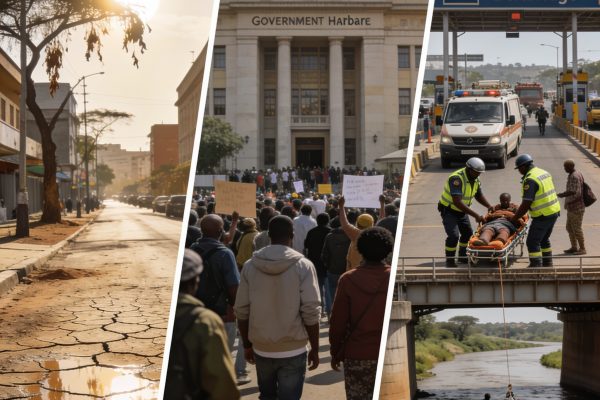
After an unusually strong maize harvest, the conversation has shifted toward drought management. Provincial officials in Matabeleland South have been told to prepare local emergency plans for every district, while agricultural voices say community weather memory and indigenous knowledge should sit beside formal forecasting. The aim is simple: protect grain, livestock, household food reserves and transport links before a hot, dry pattern bites. Harare consumers should watch for pressure on rural supply chains and food-price movements.
Politics turns toward Chinhoyi
ZANU-PF’s Politburo was expected to meet as the ruling party prepares its 23rd national people’s conference in Chinhoyi. Secretary-General Jacob Mudenda urged delegates to convert the meeting into delivery, not performance. Around the same political moment, memory and mourning have also become visible, with a broader heroes banner and renewed reburial activity showing how liberation history still shapes public messaging. At the same time, opposition commentary from Nelson Chamisa warns that debates about tenure and leadership can distract from citizens’ constitutional right to choose and change government. For ordinary voters, the test remains whether conference resolutions become better services, jobs and local accountability.
Beitbridge rescue highlights border security gaps
At the southern border, police reported the recovery of a vehicle snatched by force, the rescue of a girl held captive, and the arrest of six robbery suspects. The case reinforces the security needs at Beitbridge, a route that carries regional trade, commuters and heavy traffic. Residents, hauliers and border workers need faster response, better intelligence and stronger coordination between police, customs and private security. Elsewhere, courts have dealt with alleged nursing recruitment fraud, medicine theft linked to a state warehouse, and a fatal unauthorised surgery case. These incidents are not isolated. They reveal pressure points where jobseekers, patients and state systems can be exploited.
Business, roads and energy converge
Harare’s economic calendar is gaining momentum. Regional leaders are preparing for the 19th COMESA Business Forum, an event aimed at deeper trade, investment and private-sector links. In Bulawayo, the Zimbabwe Economic Development Conference is expected to place fintech, resilience and smart infrastructure at the centre of debate. Road modernisation in Manicaland is also reaching important construction milestones, showing that connectivity remains a national priority.
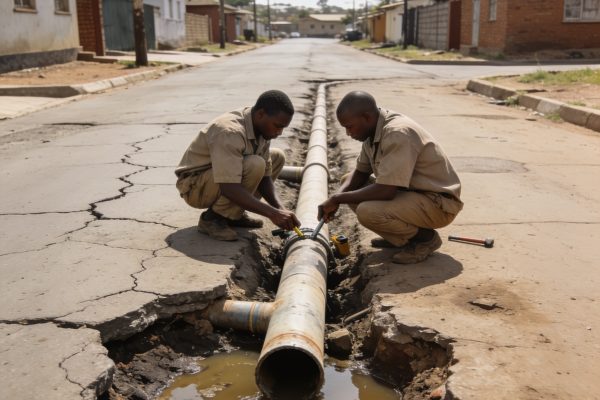
Corporate Zimbabwe is showing practical innovation too. Econet InfraCo reports that artificial intelligence has cut diesel use by 30 percent at telecom sites, reducing costs and emissions during volatile fuel times. Namib Minerals has secured a 6.5 million dollar loan for drilling and bankability work at Redwing. A Borrowdale motor event is set to bring together dealers, financiers, insurers, road-safety groups and mobility users. Each signal matters to a city like Harare, where transport, power, credit and logistics are daily concerns.
Aquaculture and tourism gain attention
The European Union has highlighted Zimbabwe’s tilapia growth under a major regional aquaculture programme, pointing to fish production as a possible food-security and livelihood tool. Tourism is also gaining continental visibility, with a local minister nominated for an African cabinet award. If climate pressure weakens some crops, diversifying protein and visitor economies becomes more urgent. For rural households, small-scale aquaculture may offer buffers; for Harare, it may support restaurants, cold chains and jobs.
Digital sovereignty begins with government email
Cybersecurity experts have raised a governance concern after noticing that official contact information linked to Zimbabwe’s London embassy includes free consumer email addresses. No breach is being claimed. The real issue is control: diplomatic and consular communication involves sensitive personal data. Free mailboxes introduce third-party platforms, foreign infrastructure and unclear retention or access paths into state operations. Ministries, agencies and parastatals should audit how much official traffic still runs through unmanaged email systems. Proper government domains, strong authentication, monitoring and clear data rules are not luxuries; they are sovereignty.
Cultural pause and public memory
A traditional cleansing ceremony linked to the Mbuya Nehanda ferry disaster is expected to suspend water movement at Lake Kariba on 4 and 5 October. The event reflects grief, ritual and safety communication in one place. Communities need ceremonies, but navigation authorities also need weather guidance, vessel checks and emergency drills. In Harare’s creative world, a former musician working in the tyre trade has reminded the public that second chances, memory and livelihood can coexist. The story is symbolic: Zimbabwe’s future depends on both practical safety and social renewal.
What readers should take away
The early October picture is clear. Farmers need drought plans that reach villages. Border towns need protection from fraud, kidnapping and armed robbery. Investors need predictable regulation and infrastructure. The state needs credible digital security and transparent institutions. Politics needs to convert conferences into delivery. Harare’s advantage is that these issues now intersect at one table, and the public is paying attention.