
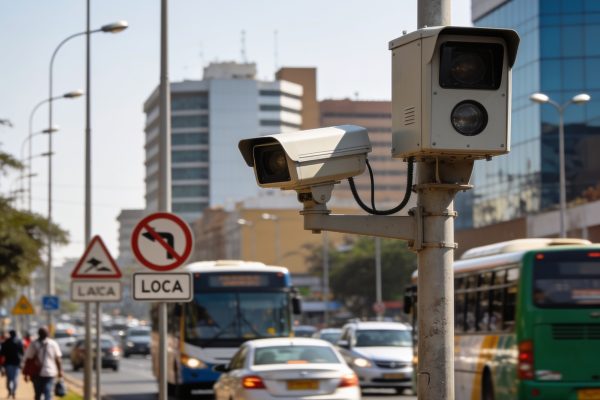
A new national speed monitoring system was commissioned in Harare on Wednesday, with Government saying the platform will tighten oversight of public service vehicles and help reduce the number of lives lost on Zimbabwe’s roads.
Transport and Infrastructural Development Minister Felix Mhona unveiled the National Speed Monitoring System (NSMS), which is expected to give transport authorities a far clearer picture of how vehicles move and operate across the country. Officials argue that level of visibility will make it harder for operators to escape scrutiny when their vehicles are driven recklessly.
What the system is meant to achieve
The NSMS is designed to supply authorities with information on vehicle movements and operations, strengthening oversight of public transport operators. According to Minister Mhona, that data will support accountability across a sector that carries the bulk of Zimbabwe’s travelling public.
Government has framed the launch around three objectives:
- Saving lives by discouraging dangerous driving;
- Improving road safety across the national transport network;
- Making public service vehicle operators answerable for how their fleets are used.
A sector under closer watch
Commuter omnibuses, long-distance buses and taxis move millions of passengers every month, and concerns about speeding and vehicle roadworthiness have persisted for years. The new system places the conduct of that sector under closer official watch, rather than relying solely on roadside policing and post-crash investigations.
For operators, the practical effect is likely to be a stronger expectation of compliance. Where monitoring reveals speeding or other risky behaviour, authorities now have a documented basis on which to act, something that has historically been difficult to establish after the fact.
What it means for commuters
Passengers are the immediate beneficiaries. A monitoring regime that discourages speeding should, in principle, translate into calmer driving on the country’s busiest routes, including the commuter corridors that feed into Harare and other urban centres.
Road safety campaigners have long argued that enforcement must be consistent and visible to change behaviour. The NSMS gives regulators a tool that works continuously rather than intermittently, which could prove more effective than periodic crackdowns on errant drivers.
Accountability beyond the driver
One of the more significant implications of the launch is that responsibility extends beyond the person behind the wheel. Transport operators who set unrealistic schedules or push drivers to complete trips at unsafe speeds now face a system that records what actually happens on the road.
That shift matters because it targets the commercial pressures that often sit behind dangerous driving, not just the individual at the wheel.
Implementation and expectations
The success of the NSMS will depend on how effectively the data it generates is used. Monitoring alone changes little unless it is paired with enforcement, penalties that stick and a willingness to act against operators regardless of their size or connections.
Operators will also be watching how the rollout is handled, particularly regarding installation costs, compliance deadlines and the technical standards vehicles must meet.
The road ahead
Government’s stated ambition is a measurable drop in road fatalities. Whether the NSMS delivers that will become clear over the coming months, as monitoring data begins to inform enforcement decisions and as the travelling public judges whether journeys have become safer.
For now, the message from Harare is that the era of largely unmonitored public transport operations is coming to an end, and that the cost of ignoring speed limits is set to rise.