HARARE – Zimbabwe’s public health sector is grappling with a deepening drug supply crisis, as the National Pharmaceutical Company (NatPharm) reveals that public hospitals in Matabeleland owe it nearly US$2.7 million. The debt, which has accumulated since 2024, has hampered the procurement of essential medicines, leaving shelves bare of even basic painkillers.
During a verification visit to NatPharm’s Bulawayo warehouse on Saturday, the Parliamentary Portfolio Committee on Health and Child Care discovered that critical medicines such as metronidazole IV, insulin, carbamazepine and ceftriaxone are either out of stock or dangerously low. Paracetamol tablets and injections are also unavailable, while psychiatric drugs and intravenous fluids are running short.
NatPharm officials told the committee that the debt, incurred under the Zimbabwe Assisted Pool System (ZAPS), could have been used to replenish stocks. The financing model allows hospitals to keep ordering without settling bills, raising concerns about sustainability. Meanwhile, an estimated US$47 million is needed for essential medicines in 2026, with only US$6 million committed so far by donors.
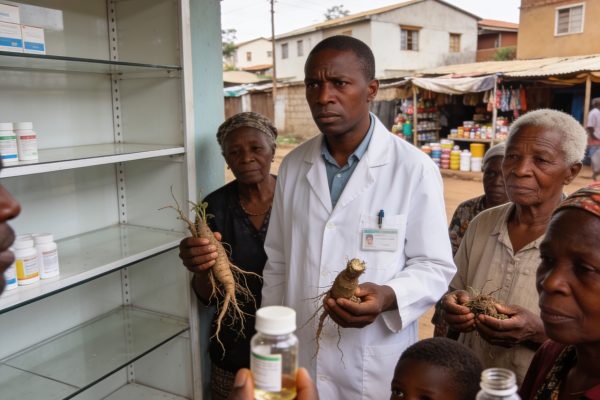
Amid this crisis, First Lady Auxillia Mnangagwa has advised residents of Dande to abandon pharmaceutical medicine and instead chew traditional roots. Speaking during a community visit, she suggested that natural remedies could replace conventional drugs, a remark that has drawn sharp criticism given the ongoing shortages.
Health activists warn that without urgent government intervention, treatable conditions may become fatal. The parliamentary committee continues to assess strategies to recapitalise NatPharm, but for now, patients face an uncertain wait for life-saving medicines.